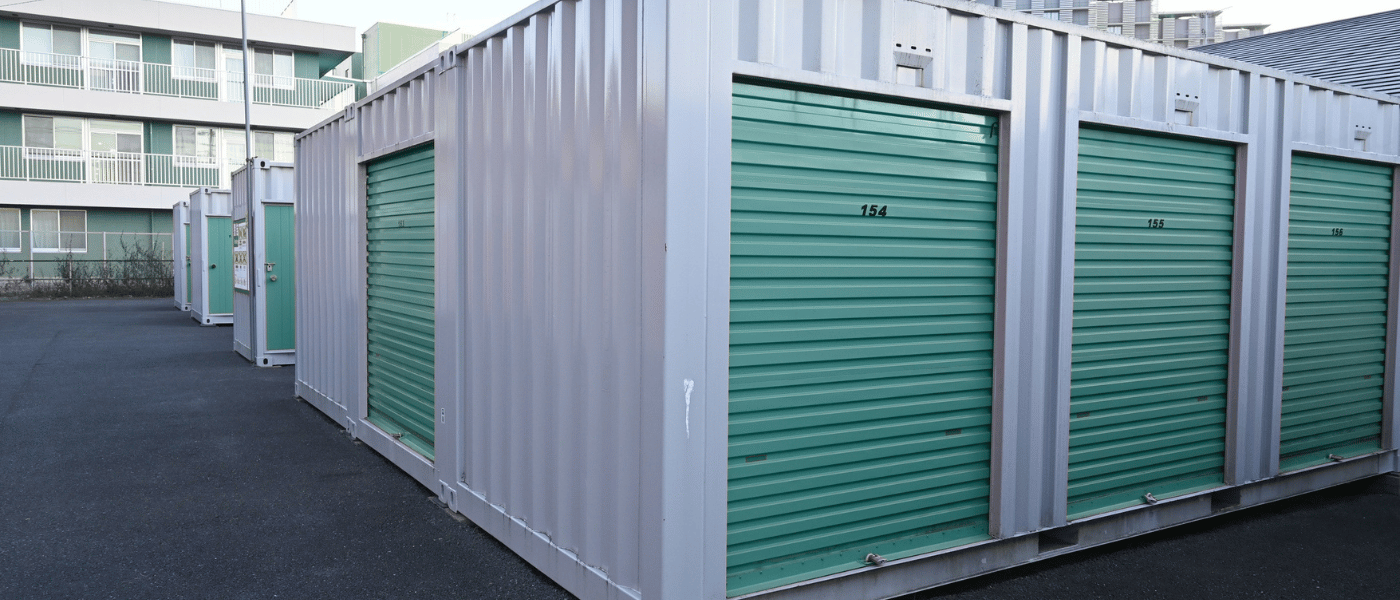
In any tactical operation, speed and precision are the primary force multipliers. For an e-commerce brand or a service-based business, your “staging ground” is your warehouse. If your team is spending five minutes searching for a single item or zigzagging across the floor to pack one box, you aren’t just disorganized—you are suffering from “operational friction” that eats your margins.
At Commando, we don’t just provide business storage units; we provide the foundation for high-speed commerce. By applying the principles of industrial engineering to your small business storage space, you can achieve massive throughput without needing a massive footprint. This guide introduces the concept of “Velocity Zoning” to help you optimize every square foot for mission success.
Understanding SKU Velocity: The Fuel for Your Workflow
Before you move a single shelf, you need data. In the logistics world, we measure “SKU Velocity”—the frequency with which a specific stock-keeping unit is picked and shipped over a set period.
Effective inventory management for small business relies on the 80/20 rule: roughly 80% of your orders will come from 20% of your inventory. Your goal is to minimize the physical distance between your “High-Velocity” items and your dispatch point. Every step saved is a second earned; every second earned is a dollar back in your pocket.
The Three-Zone Strategy: Hot, Warm, and Cold
To create a high-efficiency small warehouse organization plan, you must divide your unit into three distinct tactical zones based on movement frequency.
1. The Hot Zone: The “Forward Operating Base”
The Hot Zone is the area immediately adjacent to your packing station and the unit door. This is where your top 20% of SKUs live.
- The Goal: Zero-friction access. Items here should be at “strike height” (between the waist and shoulders) so workers don’t have to bend or reach for a ladder.
- Tactical Layout: Use open-faced bins or gravity-fed racks to ensure the next item is always ready to be grabbed.
2. The Warm Zone: The “Strategic Reserve”
The Warm Zone occupies the secondary perimeter of your unit. These are your steady movers—items that sell consistently but aren’t your daily “home runs.”
- The Goal: Organized density. Use standardized shelving units to maximize the mid-section of your unit.
- Tactical Layout: Organise by category or SKU family. While these don’t need to be right at the door, they should still be easily accessible without moving other boxes.
3. The Cold Zone: The “Deep Storage”
The Cold Zone is located at the very back and the very top of your unit. This is for seasonal inventory, bulk supplies, or archival records.
- The Goal: Maximum cube utilization. Since you only access these items once a month or once a quarter, you can afford to use pallets or high-stacking methods.
- Tactical Layout: This is the place for your “dead weight.” If you need a forklift or a rolling ladder to get to it, it belongs in the Cold Zone.
The Physics of Motion: Designing Your Fulfillment Flow
A common mistake in ecommerce storage solutions is creating a layout that leads to “bottlenecks.” To avoid this, your unit should follow a U-Shaped Flow:
- Inbound (The Intake): One side of the door is dedicated to receiving. New stock is unboxed, audited, and labeled here.
- The Staging Area: Items move from Intake into their designated Hot, Warm, or Cold zones.
- The Picking Path: A clear, unobstructed aisle that allows a picker to move from the back of the unit toward the front.
- Outbound (The Dispatch): The other side of the door is your packing station. Orders are boxed, taped, and stacked for courier pickup.
By keeping the center of your small business storage space clear, you allow for “multi-mission” capability—where one person can be receiving stock while another is picking orders without getting in each other’s way.
Ergonomics as a Force Multiplier
Industrial engineering isn’t just about where you put the boxes; it’s about the person moving them. A “Commando-spec” unit prioritizes ergonomics to prevent fatigue and injury.
- Work Surface Height: Packing tables should be at a standing “elbow height” to prevent back strain.
- Tool Shadowing: Keep tape guns, scanners, and scales in the exact same spot every day. “A place for everything and everything in its place” isn’t a cliché; it’s a tactical requirement for speed.
- Lighting: Don’t rely on the dim overheads of a standard warehouse. Add motion-activated LED strips to your shelving so your team can read SKU labels instantly.
Why Your “Base of Operations” Matters
The layout is the software, but the unit is the hardware. Business storage units that offer wide hallways, high ceilings, and easy access points make this level of optimization possible.
At Commando, we design our facilities to support the “Industrial Engineering” mindset. We provide the “blank slate” of high-spec, secure space, allowing you to deploy your zoning strategy and scale your throughput without the overhead of a massive industrial lease.
Final Intelligence Report
Space is a finite resource, but efficiency is infinite. By categorizing your inventory into Hot, Warm, and Cold zones and respecting the physics of motion, you turn your storage unit into a profit center. You aren’t just storing inventory; you are staging for growth.
Operationalize Your Space: Ready to build your high-efficiency hub? Contact Commando today to find the perfect-sized unit for your next growth phase and start optimizing your throughput.
10 Comments
cialis pill markings
April 23, 2026cialis pill markings
cialis pill markings
revatio and viagra
May 3, 2026revatio and viagra
revatio and viagra
mesalamine for proctitis
May 3, 2026mesalamine for proctitis
mesalamine for proctitis
stendra 100 mg price
May 3, 2026stendra 100 mg price
stendra 100 mg price
ivermectin strongyloides treatment science
June 25, 2026ivermectin strongyloides treatment science
ivermectin strongyloides treatment science
sildenafil food‑related pharmacokinetics
July 15, 2026sildenafil food‑related pharmacokinetics
sildenafil food‑related pharmacokinetics
vardenafil food interaction analysis
July 25, 2026vardenafil food interaction analysis
vardenafil food interaction analysis
sinusitis treatment
August 7, 2026sinusitis treatment
sinusitis treatment
Tmax Learning Resource
September 22, 2026Tmax Learning Resource
Tmax Learning Resource
comparison of sildenafil and tadalafil
October 6, 2026comparison of sildenafil and tadalafil
comparison of sildenafil and tadalafil